Wednesday, June 29, 2011

Farmer's Market Nutrition Program and Senior Farmer's Market Nutrition Program (FMNP and SFMNP)

Just last week my farm became eligible to accept these checks from WIC participants and Seniors.  This great program gives eligible people the opportunity to taste just how good a freshly picked "just that morning" tomato can taste!

The WIC Farmers Market Nutrition Program (FMNP) and Senior Farmers Market Nutrition Program (SFMNP) provide WIC recipients and eligible seniors with resources in the form of fresh, nutritious, unprepared, locally grown fruits, vegetables, and herbs from approved farmers' markets in Pennsylvania.  The purpose of the FMNP and SFMNP is to increase the consumption of fresh fruits and vegetables with low income seniors and WIC recipients, and to expand the awareness, use of and sales at farmer's markets.


Farmers Accepting the checks:
The PA Department of Agriculture is responsible for authorizing individual farmers.  Only farmers authorized by the State agency may accept and redeem FMNP and SFMNP checks.   Individuals who exclusively sell produce grown by someone else or purchased from a wholesale distributor can not be authorized to participate in the FMNP.

Eligibility:

FMNP- Recipients must be on the WIC program to receive this benefit.

SFMNP- Seniors must be 60 or older by December 31st of the program year and meet the income eligibility guidelines.  Income eligibility is basis on 185% of the federal poverty income guidelines.  The guidelines are published each year by the United States Department of Agriculture.  Call the Potter County Office on Aging to see if you are eligible.

How the Program Works for  recipients: 
Eligible WIC recipients receive the FMNP during their quarterly WIC visit during the months of May - September.  Eligible Seniors recipients receive the SFMNP by going to a distribution site in their county. Distribution site information is available by calling the county aging office in the county the senior resides.  Recipients are given a list of participating farmers and farmers' markets when they receive their checks.  These checks are redeemed for fresh fruits and vegetables grown or growable in Pennsylvania.  Each eligible recipient receives 4 - $5.00 SFMNP checks to redeem at a qualified farmers' markets or roadside stands.  There are over 1,000 FMNP participating farmers at 800 farm stands and 190 farmers' markets in Pennsylvania.

And some of us are at the Coudersport Farmer's Market in the Courthouse Square on Saturdays from 9 a.m. until 2 p.m.!

These checks are available every year and sadly, only a small portion of them are ever redeemed.  If you think you, or someone you know, is eligible for FMNP and SFMNP checks, ask about them at your WIC office or local Office on Aging.  This is a chance to taste some yummy fresh fruit or even try something new!


Wednesday, June 22, 2011

Tomato Hands

Yesterday, I spent a lot of time picking suckers off the tomato plants.  I didn't realize quite how staining tomato plant juice can be!  These photos are after multiple scrubbings and washings. You can bet I'll wear gloves next time!


I've spent the past few weeks planting and digging into the earth to plant seeds that will grow healthy and clean food for myself and others.  These hands may be rough, ripped up, and sadly in need of a manicure, but these are the hands of a gardener!

Tuesday, June 21, 2011

Deer Sighting And Our First CSA Week

 I was preparing to work on this blog this morning, when I heard my schnauzer, Candy Cane, barking and turned to see a doe running and almost jumping over the dog in her haste to get away.  A minute later the dog started barking again and I looked to see the doe standing her ground and watching the dog.  Out of curiosity, I walked out to see how close to the doe I could get.  I was about 20 feet away from her..


...before she turned tail to run another 20 feet away.  I wonder if there's a 
little fawn hiding out in that growth?  


We had our first CSA pick up this past Friday and Saturday.  The baskets contained salad greens, beets, garlic scapes, free range eggs, maple syrup, jelly, herbs (tarragon, parsley, chives, and oregano), and chow chow. 


We look like we'll have a good basket for next week, but our third week's basket may hold less as we wait for the gardens to put forth their bounty.  That's part of being in a CSA and gardening in general - you enjoy joys of the bounty along with the sorrow of the dearth.  Once things get going though... (God willing) watch out for the tidal wave of vegetables!   

One of the most delightful things about a garden
is the anticipation it provides.  
 ~ by W.E. Johns, 


Sunday, June 19, 2011

Why There Are Three

No, the bears didn't get the fourth hive up behind Jennigans Auto Body!  

We moved it to our house for pollination of our own gardens.  The gentleman who was going to sell us the Russian bees that we planned to set up for our gardens lost his hives due to contaminated pollen patties and we weren't able to find any others suppliers that we liked as well.

Thursday, June 16, 2011

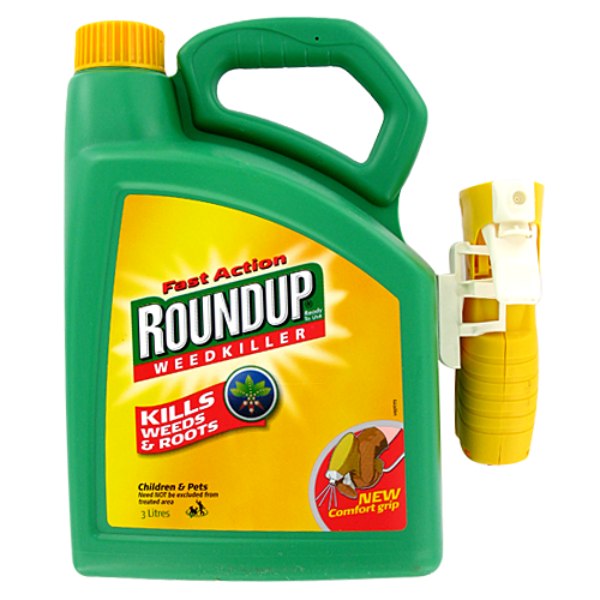
Roundup Linked With Birth Defects

As a follow up to yesterday's report on pesticides, I found this report on the herbicide, glyphosate, the chemical upon which the trademark named herbicide, Roundup, is based.  This herbicide report comes from the European Community.  In common practice in the United States, farmers use Roundup to kill the growth fields before they plant.  Many, many homeowners commonly use Roundup to kill weeds in their yards and make it look "tidy".

monsanto-roundup


Here are excepts from the report, "Roundup and Birth Defects:  Is the public being kept in the dark?" from Earth Open Source 2011.

"Research published in August 2010 showed that the best-selling herbicide Roundup causes malformations in frog and chicken embryos at doses much lower than those used in agricultural spraying.  The malformations found were mostly of the cranofacial and neural crest type, which affect the skull, face, midline, and developing brain and spinal cord."

"The issue is of particular concern now that Monsanto and other producers of genetically modified seed are trying to get their glyphosate-tolerant crops approved for cultivation in Europe.  If the EU Commission gives its approval, this will lead to a massive increase in the amount of glyphosate sprayed in the fields of EU member states, as has already happened in North and South Americas.  Consequently, people's exposure to glyphosate will increase."

To read the full report, go to Round Up and Birth Defects.

For more information about the use of the commonly used herbicide, you can go to:

Pathogen in Roundup Ready Soy and Corn Could Lead to Calamity, Scientist Warns  from Mother Earth News

Monsanto and the Roundup Ready Controversy from SourceWatch.org

Need a weed killer in your garden?  Fill a spray bottle with white vinegar and spray away.  It may require more applications then chemical herbicides, but it's not going to have the side-effects of the chemicals either!

Wednesday, June 15, 2011

EWG Dirty Dozen and Clean Fifteen

Washington, DC - Environmental Working Group has released the seventh edition of its Shopper’s Guide to Pesticides in Produce with updated information on 53 fruits and vegetables and their total pesticide loads. EWG highlights the worst offenders with its “Dirty Dozen” list and the cleanest conventional produce with its “Clean 15” list.

Go to the site at Dirty Dozen and Clean Fifteen for more information and to download a PDF file you can print and fold to take shopping.

EWG's Shopper's Guide to Pesticides in Produce

Dirty Dozen
Buy these organic
1
Apple
Apples
2
Celery
Celery
3
Strawberries
Strawberries
4
Peaches
Peaches
5
Spinach
Spinach
6
Nectarines
Nectarines
– imported
7
Grapes
Grapes – imported
8
Red Pepper
Sweet bell peppers
9
Potatoe
Potatoes
10
Blueberries
Blueberries
– domestic
11
Lettuce
Lettuce
12
Kale
Kale/collard greens
Clean 15
Lowest in Pesticide
1
Onions
Onions
2
Sweet Corn
Sweet Corn
3
Pineapple
Pineapples
4
Avocado
Avocado
5
Asparagus
Asparagus
6
Peas
Sweet peas
7
Mango
Mangoes
8
Eggplant
Eggplant
9
Cantelope
Cantaloupe
- domestic
10
Kiwi
Kiwi
11
Cabbage
Cabbage
12
Watermelon
Watermelon
13
Sweet Potatoes
Sweet potatoes
14
Grapefruit
Grapefruit
15
Mushrooms
Mushrooms